
The Storyboard Media Group Blog
Why My Creative Agency is Choosing Humans Over AI
Storyboard Media Group’s founder explores the impact of AI on the creative industry and the decision to remain human-led. After a year of reflection, this article outlines why the agency will continue to prioritize human collaboration over AI-generated media. Learn about our commitment to supporting creative professionals and why we believe authentic human experience is essential to high-quality storytelling.
Article Highlights
After a year of reflection, Storyboard Media Group is officially committing to a human-first creative process.
While AI can replicate output, it cannot replicate the human connection, shared experiences, and on-set problem solving that define the creative process.
Storyboard Media Group will utilize AI only for minor time-saving tasks that do not displace human roles such as voice actors, animators, or crew members.
Acknowledging that AI-adoption may lower competitor costs, Storyboard Media Group prioritizes long-term creative integrity, human work, and "sweat equity" over short-term profit maximization.
A Year of Analysis Paralysis
Writing this article has been on my to-do list for at least a year. Yet I’ve never sat down at my keyboard to type it out. It’s never been mediocre, run-of-the-mill procrastination that has stopped me from doing it. Instead, I chalk it up to analysis paralysis. It’s been more than a year of rethinking, over-thinking, thinking twice, considering this and considering that, taking this and that into account, thinking of the fallout (if there is any), writing lines and then deleting them ad nauseam.
Still, allow me take a moment to start at the beginning - I founded Storyboard Media Group in March of 2013. Since that time I have worked with amazing clients, on amazing projects, with amazing creatives and partners in amazing places. Storyboard’s clients include startups, Fortune 100s, lifestyle brands, the US Military, schools and universities, tech companies and the list goes on and on. My team and I have filmed product videos, interviews, L&T videos, instructional videos, live events, television commercials, and social media content. We’ve worked in NY, NJ, CT, PA, VA, CA, TX, Ontario, Canada, Ireland, Portugal and a few other places along the way. Our video work that has gone on to help win Brandon Hall awards for our clients, led successful funding campaigns, helped with product launches, taught young people about music and given career advice.
Since the creation of my company I’ve continued to learn (about business and my craft), grow in confidence and abilities, and create and connect with clients, partners, freelancers and other filmmaking professionals.
I don’t say these things to tout the accomplishments of my business. In fact, I mention all this because it’s essential to what I want to - finally - put into words.
The Timeline of Useful AI
I remember about 5 years ago when people were really starting to talk about AI and what it was going to be able to do. They always seemed to put a 10 year countdown on the warnings. I always (and rightfully so) said that it wasn’t going to take that long at all. And that jobs and livelihoods were going to be affected in big ways long before people expected it. Now we’re here, on that precipice with a lot of people already starting to feel the pain: filmmakers, marketers, content producers, service industry workers, doctors, grocery workers, lawyers, blue collar, white collar, etc.
AI creates visuals, spreadsheets, new software, games, code, it can find diseases, it can write stories, and it can look and sound like a human. As it continues to improve it will take more jobs - this job, that job, her job, your job, their job, his job, your mother’s job, your nephew’s job, etc. All the while It is being pushed by people who - in their own words - aren’t exactly sure where it will lead, why it will lead us there, and if it’s even safe and advisable to keep it going.
But this article isn’t about the politics of AI. It isn’t specifically about the positives or negative of AI. And it isn’t meant to focus on the macro-level concerns about the moral, societal, or economical questions about AI. Instead, it’s an answer to something I’ve been asking myself, first as a creator, and second as a member of a functioning society. That question is “how will I personally approach the effects of AI?”
Some Current Impacts
Almost all of us are being affected by AI - even if it’s not a topic of everyday conversation. Some people are losing their jobs as a direct, immediate result from the implementation of AI in the workplace. Those that aren’t currently losing jobs are feeling the effects in a tougher economy, and/or an existential dread knowing that the clock is ticking until they lose their job, or their spouse loses theirs. I feel angry. I feel sad. And I feel terrible for people who are taking the first punches from this paradigm shift.
But I’m also heartened to see people start to demand limits to AI - whether it’s labels on digital content to identify AI, music platforms banning AI music, and some magazines taking a public stance to say no to AI images. And I love the uproar when some businesses use AI in ways that are just completely out-of-touch with life.
A Business Owner’s Response to AI
In my personal (non-business) life I take an approach to AI that includes immediately turning off and clicking out of things made with AI - music, movies, commercials, news segments, photos, stories, and political propaganda. Unfortunately, AI will keep getting better and make it harder to identify and tune out. While I realize that I won’t single-handedly stop the march of AI, I know the alternative to doing these small things is to do nothing. And that’s not a ‘nothing’ I’m prepared to do. Regardless, these personal strategies are not the subject of this article.
How will I approach AI as a creative professional and as a business owner? The answer to this question is the thing I’ve been wanting to write for over a year. Storyboard will continue to hire, and work with humans to do creative work. It’s just that simple for me. And although I’m only one business owner who runs a small business, the alternative to doing this is to use AI in any way possible and disregard all the people who have made their careers in creative work; they’ve honed their skills, they’ve learned to run their businesses, and to market themselves. In essence, they have blood, sweat and tear equity in what they do.
I understand that many other agencies will adopt as much as AI as they possibly can to maximize their profits at the expense of people. They can do that, it’s their choice. And I understand that this will most likely drive costs down for those agencies so they can drop their rates and handily compete against agencies like Storyboard Media Group that continue to utilize human beings to do creative work. This is a race to the bottom as far as I’m concerned, and it’s one I have no interest in pursuing or trying to win.
Why Do I Favor Humans?
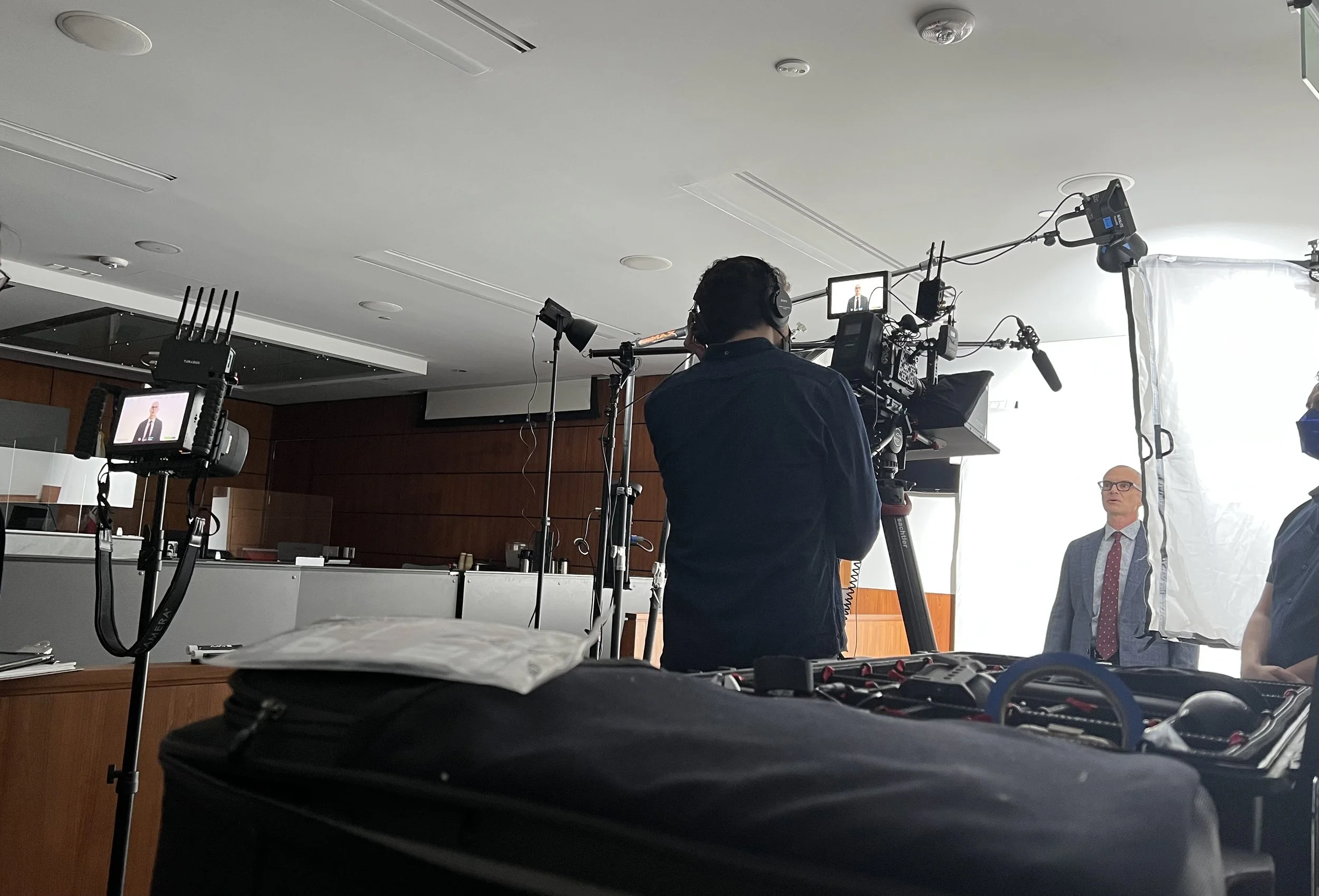
Over time, I’ve worked with amazing clients on amazing projects alongside other amazing creative professionals. I’ve solved unexpected challenges with in-the-moment solutions on set. In this work I’ve laughed with others, gotten stressed out and bailed out on location, made mistakes, had victories, listened, directed, talked with my team and clients over lunches, created beautiful scenes on camera, felt the thrill of getting the first shot of a project after days or weeks of planning, and so much more. I’ve woken up at 4am just to beat traffic into NYC so that a 9am start time is possible. I’ve wrapped a project at 5pm and been stuck in a car in traffic with my team in the city until 9pm because of a problem at a tunnel or bridge.
Human connections, human experiences, and human creation - no matter how brief they may be (days, months or years) - are the core of what I believe we are as humans. Left unchecked, AI will take a lot if this away and leave us with…what? So I choose to ‘check’ it however tiny my footprint may be.
Yes, there are AI tools that I think are useful and time-saving. Storyboard will use these when they don’t come at the expense of a freelancer, voice over artist, on-set workers, hair and makeup artists, animators and other positions. Yes I am aware that this may prove to be the existential threat to my company. I sincerely hope not, but in reality this is out of my hands in light of the decision I’ve made.
What Will the Future Hold?
Like everyone else, I have no idea. However, I do see humans starting to push back against the onslaught of AI. For example, new production companies are slowly taking shape to fill in the creative vacuum that is definitely going to be left behind as major movie studios start AI-slopping their product onto streaming platforms and into movie theaters. And in other cases magazine editors have put AI rules into effect that - among other things - help protect jobs.
In other words, I see some humans fighting back by consciously deciding to go around the whole AI sphere and do what humans do best - create, connect, fail, succeed, overcome and experience things for the mere sake of doing those things, and feeling the accomplishment of creating. This is what I’m choosing to do with Storyboard Media Group in my own little corner of the creative sphere and, whatever the outcome, I’m comfortable with my decision.