

The Storyboard Media Group Blog
Why My Creative Agency is Choosing Humans Over AI
Storyboard Media Group’s founder explores the impact of AI on the creative industry and the decision to remain human-led. After a year of reflection, this article outlines why the agency will continue to prioritize human collaboration over AI-generated media. Learn about our commitment to supporting creative professionals and why we believe authentic human experience is essential to high-quality storytelling.
Article Highlights
After a year of reflection, Storyboard Media Group is officially committing to a human-first creative process.
While AI can replicate output, it cannot replicate the human connection, shared experiences, and on-set problem solving that define the creative process.
Storyboard Media Group will utilize AI only for minor time-saving tasks that do not displace human roles such as voice actors, animators, or crew members.
Acknowledging that AI-adoption may lower competitor costs, Storyboard Media Group prioritizes long-term creative integrity, human work, and "sweat equity" over short-term profit maximization.
A Year of Analysis Paralysis
Writing this article has been on my to-do list for at least a year. Yet I’ve never sat down at my keyboard to type it out. It’s never been mediocre, run-of-the-mill procrastination that has stopped me from doing it. Instead, I chalk it up to analysis paralysis. It’s been more than a year of rethinking, over-thinking, thinking twice, considering this and considering that, taking this and that into account, thinking of the fallout (if there is any), writing lines and then deleting them ad nauseam.
Still, allow me take a moment to start at the beginning - I founded Storyboard Media Group in March of 2013. Since that time I have worked with amazing clients, on amazing projects, with amazing creatives and partners in amazing places. Storyboard’s clients include startups, Fortune 100s, lifestyle brands, the US Military, schools and universities, tech companies and the list goes on and on. My team and I have filmed product videos, interviews, L&T videos, instructional videos, live events, television commercials, and social media content. We’ve worked in NY, NJ, CT, PA, VA, CA, TX, Ontario, Canada, Ireland, Portugal and a few other places along the way. Our video work that has gone on to help win Brandon Hall awards for our clients, led successful funding campaigns, helped with product launches, taught young people about music and given career advice.
Since the creation of my company I’ve continued to learn (about business and my craft), grow in confidence and abilities, and create and connect with clients, partners, freelancers and other filmmaking professionals.
I don’t say these things to tout the accomplishments of my business. In fact, I mention all this because it’s essential to what I want to - finally - put into words.
The Timeline of Useful AI
I remember about 5 years ago when people were really starting to talk about AI and what it was going to be able to do. They always seemed to put a 10 year countdown on the warnings. I always (and rightfully so) said that it wasn’t going to take that long at all. And that jobs and livelihoods were going to be affected in big ways long before people expected it. Now we’re here, on that precipice with a lot of people already starting to feel the pain: filmmakers, marketers, content producers, service industry workers, doctors, grocery workers, lawyers, blue collar, white collar, etc.
AI creates visuals, spreadsheets, new software, games, code, it can find diseases, it can write stories, and it can look and sound like a human. As it continues to improve it will take more jobs - this job, that job, her job, your job, their job, his job, your mother’s job, your nephew’s job, etc. All the while It is being pushed by people who - in their own words - aren’t exactly sure where it will lead, why it will lead us there, and if it’s even safe and advisable to keep it going.
But this article isn’t about the politics of AI. It isn’t specifically about the positives or negative of AI. And it isn’t meant to focus on the macro-level concerns about the moral, societal, or economical questions about AI. Instead, it’s an answer to something I’ve been asking myself, first as a creator, and second as a member of a functioning society. That question is “how will I personally approach the effects of AI?”
Some Current Impacts
Almost all of us are being affected by AI - even if it’s not a topic of everyday conversation. Some people are losing their jobs as a direct, immediate result from the implementation of AI in the workplace. Those that aren’t currently losing jobs are feeling the effects in a tougher economy, and/or an existential dread knowing that the clock is ticking until they lose their job, or their spouse loses theirs. I feel angry. I feel sad. And I feel terrible for people who are taking the first punches from this paradigm shift.
But I’m also heartened to see people start to demand limits to AI - whether it’s labels on digital content to identify AI, music platforms banning AI music, and some magazines taking a public stance to say no to AI images. And I love the uproar when some businesses use AI in ways that are just completely out-of-touch with life.
A Business Owner’s Response to AI
In my personal (non-business) life I take an approach to AI that includes immediately turning off and clicking out of things made with AI - music, movies, commercials, news segments, photos, stories, and political propaganda. Unfortunately, AI will keep getting better and make it harder to identify and tune out. While I realize that I won’t single-handedly stop the march of AI, I know the alternative to doing these small things is to do nothing. And that’s not a ‘nothing’ I’m prepared to do. Regardless, these personal strategies are not the subject of this article.
How will I approach AI as a creative professional and as a business owner? The answer to this question is the thing I’ve been wanting to write for over a year. Storyboard will continue to hire, and work with humans to do creative work. It’s just that simple for me. And although I’m only one business owner who runs a small business, the alternative to doing this is to use AI in any way possible and disregard all the people who have made their careers in creative work; they’ve honed their skills, they’ve learned to run their businesses, and to market themselves. In essence, they have blood, sweat and tear equity in what they do.
I understand that many other agencies will adopt as much as AI as they possibly can to maximize their profits at the expense of people. They can do that, it’s their choice. And I understand that this will most likely drive costs down for those agencies so they can drop their rates and handily compete against agencies like Storyboard Media Group that continue to utilize human beings to do creative work. This is a race to the bottom as far as I’m concerned, and it’s one I have no interest in pursuing or trying to win.
Why Do I Favor Humans?
Over time, I’ve worked with amazing clients on amazing projects alongside other amazing creative professionals. I’ve solved unexpected challenges with in-the-moment solutions on set. In this work I’ve laughed with others, gotten stressed out and bailed out on location, made mistakes, had victories, listened, directed, talked with my team and clients over lunches, created beautiful scenes on camera, felt the thrill of getting the first shot of a project after days or weeks of planning, and so much more. I’ve woken up at 4am just to beat traffic into NYC so that a 9am start time is possible. I’ve wrapped a project at 5pm and been stuck in a car in traffic with my team in the city until 9pm because of a problem at a tunnel or bridge.
Human connections, human experiences, and human creation - no matter how brief they may be (days, months or years) - are the core of what I believe we are as humans. Left unchecked, AI will take a lot if this away and leave us with…what? So I choose to ‘check’ it however tiny my footprint may be.
Yes, there are AI tools that I think are useful and time-saving. Storyboard will use these when they don’t come at the expense of a freelancer, voice over artist, on-set workers, hair and makeup artists, animators and other positions. Yes I am aware that this may prove to be the existential threat to my company. I sincerely hope not, but in reality this is out of my hands in light of the decision I’ve made.
What Will the Future Hold?
Like everyone else, I have no idea. However, I do see humans starting to push back against the onslaught of AI. For example, new production companies are slowly taking shape to fill in the creative vacuum that is definitely going to be left behind as major movie studios start AI-slopping their product onto streaming platforms and into movie theaters. And in other cases magazine editors have put AI rules into effect that - among other things - help protect jobs.
In other words, I see some humans fighting back by consciously deciding to go around the whole AI sphere and do what humans do best - create, connect, fail, succeed, overcome and experience things for the mere sake of doing those things, and feeling the accomplishment of creating. This is what I’m choosing to do with Storyboard Media Group in my own little corner of the creative sphere and, whatever the outcome, I’m comfortable with my decision.

More Than Just Views: Why Your Next Powerhouse Video Needs to Be Interactive
Sometimes simply creating a video isn't enough. All of us are constantly bombarded with content, and capturing your customer’s attention – and more importantly, holding it – is a constant challenge. But what if your videos could do more than just play? What if they could engage, personalize, and even convert?
Welcome to the world of interactive video, a content format that's changing how businesses connect with their audience.
Sometimes simply creating a video isn't enough. All of us are constantly bombarded with content, and capturing your customer’s attention – and more importantly, holding it – is a constant challenge. But what if your videos could do more than just play? What if they could engage, personalize, and even convert?
Welcome to the world of interactive video, a content format that's changing how businesses connect with their audience.
What Exactly is an Interactive Video?
Interactive videos go above and beyond what we can call ‘passive viewing.’ Interactive videos transform your audience from spectators into active participants. For example, imagine a video where viewers can:
Choose their own adventure: Guide the storyline, leading to content that is most relevant to their interests.
Click on products: Instantly learn more about an item, or even add it to a cart, directly within the video.
Test their knowledge: Answer quiz questions or participate in polls, making their experience dynamic and memorable.
Explore a scene: Dive into a 360-degree view, experiencing your content in an new, immersive way.
Provide their details: Seamlessly fill out a lead form without ever leaving the video.
Being able to make these things happen isn’t just a fancy trick - it’s interactive video. It’s a powerful tool designed to create a personalized, engaging, and highly effective viewing experience.
How Interactive Video Drives Real Results for Your Brand
Do you want to make your content work harder all while making it easier for your audience to get familiar with your brand? Interactive video offers a compelling ROI by:
Skyrocketing Engagement: By giving viewers control, you hold their attention longer. This isn't just about watch time; it's about meaningful interaction that creates a lasting impression. We are fed so much digital information all the time that being able to take a little control of video content, and maybe even having a little fun, seems like a gift.
Boosting Conversions & Sales: Imagine a customer seeing a product they love in your video and being able to click and buy it right then and there. Interactive "shoppable" videos shorten the sales funnel, turning viewers into buyers more efficiently. There’s no more seeing your product and then having to search somewhere else for it.
Personalizing the Customer Journey: No two customers are alike. With branching narratives, you can tailor the video experience to individual preferences, delivering highly relevant content that resonates deeply.
Supercharging Lead Generation: Embed forms and data inputs directly into your videos to capture valuable customer information effortlessly, streamlining your lead nurturing process.
Revolutionizing Training & Education: From onboarding new employees to explaining complex product features, interactive videos make learning more dynamic, engaging, and ultimately, more effective with embedded quizzes and knowledge checks.
Where and How Does Interactive Video Truly Shine?
There are a ton of really effective use case scenarios for this type of content. And while it may not always be the direction you need to take your brand, there are situations where it shines making it an absolute ‘must.’
Marketing & Advertising: You can craft unforgettable ad campaigns, demonstrate products with interactive moments, and tell your brand story in a way that truly captivates.
E-commerce: Transform product showcases into direct sales channels with clickable ‘hotspots’ and integrated purchasing options. This is a great way to make the purchasing decision of your customer easy and quick.
Education & Corporate Training, and Internal Communications: Use it to create incredibly engaging learning modules, interactive tutorials, and effective onboarding experiences that improve knowledge retention for your team. You can also use interactive video to release important company updates and policy explanations, and team building content that is more engaging and impactful for your employees.
The Best Part? No Special Software Needed (for your audience!)
One of the biggest misconceptions about interactive video is that viewers need special software to watch it. Not true! The beauty of interactive video is that your audience can experience it seamlessly in their standard web browser or on their device.
While creating these dynamic experiences does require specialized platforms that allow us to embed these interactive elements, the end result is most often an embed of a highly compatible and accessible video that plays just like any other, but with a powerful difference. Even YouTube provides a way to make your videos interactive with the ‘chapters’ option which makes it easy for viewers to click directly to content they want to watch.
Ready to Transform Your Video Content?
Storyboard Media Group specializes in crafting high-impact video content that delivers exceptional returns. Interactive video isn't just a trend; it's a strategic tool that can elevate your brand, engage your audience like never before, and drive measurable results.

The Power of How-to Product Videos
Want to really connect with your customers? How-to videos are your secret weapon! They're not just helpful guides; they build trust and show you're the expert. By highlighting the best features, benefits, and ways to use your products, you'll boost engagement, build a loyal audience, and see those conversion rates climb. Let's make your brand the go-to resource!
We all know the power of a well-done, straight-up product video. They’re great for explaining why someone needs something. But for some products, people don’t just need to know about them, they need to know how to use them. That's where how-to videos come in - from fancy skincare products to key-less entry systems that would have been stuff of sci-fi movies 10 years ago. Let’s not forget air fryers! Who knew you could make so much in an air fryer?
Basically, if a product exists with buttons, dials, knobs, software, hidden applications, multiple screens or an owner’s manual that weighs as much as an encyclopedia you might just need a video to explain it.

A 1-minute demonstration video was made for e-commerce channels to accompany the client’s newest product launch.
WHAT MAKES A GOOD HOW-TO VIDEO?
We’ve broken the process down into what we think are the 6 best practices for making a great how-to product video.
Keep it simple - Clear, easy-to-follow instructions are key. Make sure your script is concise and easy to follow. Take some time to read it out loud to fellow team members to see how it sounds and feels. When it comes to the video itself don’t just settle for one angle. Close-ups are your friend! Use the video content to complement what the script is saying. Zoom in on that dial or detail so the audience can see it clearly. Basically, don't leave people guessing.
Make sure it looks good - Nobody wants to watch a poorly-made or boring video. Use high-resolution, clear shots. Make sure the lighting is good so people can see what is happening in the video. Throw in some animations, graphics, and on-screen text keep things interesting. But whatever you do, make sure it actually adds to the video.
Know beforehand where your video content will live - Is your video going to be used on social channels? Maybe it needs to be recorded in vertical resolution for Instagram. Will it be used on an e-commerce site? You should know what kind of specs your video needs to be so that it works well with the platform you load it to. Are you going to use it in multiple ways? Then you need to make sure when you film it that you film it in a way that allows horizontal and vertical delivery for multiple platforms.
Break it down - Sometimes step-by-step is the way to go. Remember that if your audience is watching your video for the first time they may not know anything about your product. It’s better to bet that they need more information than less information. But always remember best practice number one. Keep it simple, and don’t give them more information than they really need.
Go 360 - For bigger things, like cars or locations where your clients find you, 360 videos are amazing. We've used them to show off car interiors and to give virtual tours of medical facilities. Even smaller things can benefit from a 360-degree video. Jewelry like watches and diamond rings, sunglasses and products with interesting packaging come to mind immediately as things that benefit from this technique.
POV can be your friend - Sometimes, showing things from the user's perspective is the best way to go. It's like saying, "Here's what you'll see when you do this."

This POV video put the viewer in the so-called driver’s seat to understand how easily and quickly the could use this app
DO YOU NEED A HOW-TO DEMONSTRATION VIDEO?
If you have a product that takes a little explaining, and you want happy clients, the answer is probably ‘yes.’ Here’s why.
People actually get it - A good video will help people understand how to use your product, which means they'll love it more, which means they’ll use it more. They may even discover new uses for it that they didn’t realize were possible because they see something in your video. This also means they’ll use it more because it has more uses for them.
You look professional - Having a good looking video means people use your content to understand the product, and people know you’re the go-to expert. It also shows that you care about your customers. The alternative is that they go looking on the Internet for other people showing them how to use it. You own the product or service, and you should own the ecosystem - video, print, website, photos - that supports it. This also helps you create connections with your customers and clients.
More sales and repeat customers - If people know how to use your product, they're more likely to buy it. Simple as that. And more than likely they’ll be back.


WHAT ARE SOME OF THE TYPES OF VIDEOS WE’RE TALKING ABOUT?
Product tutorials (see gallery below): This one is obvious, but essential. Product tutorials show people how to set up, use, and get the most out of your product. They can be animated, live-action or talking-head style. They can use actors or people from your team. They can be simple looking, or more involved depending on the message and feeling you want to convey.
Live-action videos: These videos use actors or people from your team and can include a story to be acted out that shows your product in use, or a talking head where a person is simply conveying information or showing how to use something. They can be lifestyle videos (for example, a day-in-the-life of someone using your product), demonstration videos, explainer videos and more.
Animated explainer videos: Sometimes the easiest way to demonstrate or explain a product is with really good animated graphics. The great thing about this option is that the graphics, colors and text can all be custom-created to match your brand.


USE CASE SCENARIOS FOR HOW-TO VIDEOS
This entire article has centered on explaining how customers and clients can use your product. But how-to product videos can accomplish some other things too.
Troubleshooting: Fix common problems and answer FAQs in an easy manner.
Onboarding: Train new employees or customers quickly and easily by showing them how to use a machine, do a process or a work through a procedure.
Show off features: This is where it gets fun. Highlight the cool things your product can do, and include things customers might not even know about your product. Apple is very good at this when they point out hidden features, shortcuts and tips and tricks that aren’t immediately noticeable by users of their products.
Don’t wait for customers to call you with question after question about your product. Make it easy for them to learn everything they need to do with a how-to product video and make them a customer for life. Contact us for more information about how to get started. We help with concepts, creative ideas, scripts, filming, editing, and more. It’s everything you need to get your video content project up and running.

Short-Form Video Content: The Ultimate Guide for Businesses in 2025
Short-form videos are essential for businesses looking to boost engagement, sell via e-commerce and reach wider audiences in 2025. These easily consumable videos are perfect for grabbing attention on social media and promoting longer-form content. Don't miss out - experiment with different formats and find what works best for your brand.
In our 2025 Video Trends report, Storyboard Media Group called out short-form video content as something brands need to really pursue to stay relevant, boost e-commerce sales, and to have a strong, continuing online presence. This content is a powerful tool that businesses can use to reach a wider audience and engage with potential customers. And because it has become more and more essential for businesses to create content that is easily consumed and shared on social media, short-form videos are the perfect solution. For busy brands and marketing teams they are quick and easy to make. For audiences they are quick and easy to watch, and can be highly effective in capturing attention.

Short-form content can be made quickly, on-the-fly, and without a ton of planning.
What Are the Benefits of Short-Form Video Content?
There’s not a lot of downside to short-form videos unless you expect them to do all the marketing work you need done. They have their place as attention-grabbers, but they don’t usually go too deep. If you use them correctly they can provide a lot of ROI and engagement.
They are (relatively) easy to create: Short-form videos can be produced quickly and easily, even with a limited budget. You’re not really telling big, tall and intricate stories with short-form content. You’re creating “bites” to get the attention of viewers. The ease of creation and short length of these videos means you can produce a lot of them and maintain a continuous online presence.
They make it easy to test your messaging: Because short-form content is quicker to create you can be as creative as you want to be. Have fun, experiment with different formats, play around with different visuals. See what resonates with your audience and then latch onto that and go full-steam ahead.
Effective marketing tool: Short-form videos are a great way to quickly gain attention on social media. And although short-form videos have a short shelf life, they can be a useful way to promote your longer-form content. When viewers see your shorter videos they become interested in investing more time getting to know you and your brand. In essence, short-form videos lead viewers to your more in-depth content.
Targeted messaging: Short-form videos should be very specific in the information and visuals they provide. For example, while an About Us video for your brand might be two minutes long and include multiple interviews across different locations, tell viewers all about your brand’s history and mission, and introduce your team and what they do, short-form videos might be a 30 second look at your product being used. It could also be a 15-second clip of your Founder talking. They are used to deliver concise, impactful visuals and messages.
Messaging NOW/ASAP/STAT: Because short-form content is quick to create, they’re an excellent way to announce things at a moment’s notice. This could be a new product, a new change in service, a sale or a message from your company’s president. They may not be in-depth and complex, but they’re very similar to opening your window and shouting down to the street. People will hear and see you, and you get your point across. However, we don’t suggest you open your window and start yelling out at the people on the street.
How Can Your Brand Use Short-Form Video Content?

This very simply created video provided customers a quick look at the many features of a client’s vest.
Like anything else, you need a plan. Even though this content is quick and easy to make, you’re probably going to create a lot of it. So go into the process like you would any other marketing or sales project and create outlines. What do you want to accomplish? Who are you trying to reach? What type of content do you want to create and why? Here are some ways brands can successfully use short-form videos.
Boost Your E-Commerce: Short-form videos are perfect to quickly showcase your product on selling sites. They don’t have to be mega-productions, but they should look really nice especially because you’re showing off your product and you want people to buy it.
Make Product Teasers: These types of video are made of quick cuts showcasing a new product's features with upbeat music. Imagine a smartphone launch video with close-ups of the camera, sleek design, and someone using it seamlessly. Your teaser can use mysterious clips to hint about an upcoming release to build anticipation. For example, a fashion brand could reveal glimpses of a new collection with dramatic lighting that only partially shows the pieces, but gives the audience enough to know that they want to know more.
Show Your Viewers Behind-the-Scenes (BTS): Make content about a day in the life at your company that showcases your team and culture. This could be a fun montage of employees working, collaborating, and having fun. A video like this should be (mostly) unscripted and inspired by your team itself. You can also show the making of a product, and highlight the craftsmanship and process. A bakery could show the process of making bread from start to finish, with close-ups of kneading dough, the oven, and the final product.
Create How-Tos and Tutorials: These videos are meant to be quick and to the point. We once had a client with a coat that had all kinds of utility uses, and we created a video showing a person wearing the coat and doing quick mentions of all its uses. We later created a longer video with graphics, call outs, voice over and more. But the original short video was something the client could use immediately and it got viewers interested to learn more.


Create Customer Testimonials: These are short and snappy reviews from satisfied customers. There’s almost nothing more effective than a happy customer sharing their positive experience with a product or service in a video for your brand to use. Testimonial videos show that you have clients who are willing to take the time and effort to speak on your behalf because they’re so happy. If you have a customer who seems willing to do this for you, just ask them to record something on their phone (in vertical mode). It’s quick and easy for them, and a gold mine for you.
Make Before and After Videos: These are almost like testimonial videos but no one needs to talk on camera. Just showcase the impact of your product. For example, skincare companies show clients’ skin before and after using their product. This is also a great way to have User-Generated Content (UGC) which is another trend we’re following in 2025.
The All-Important FAQ Video: Answering common customer questions in a visually engaging way is a great use of short-form video content. A tech company could create a short video explaining how to reset a password or troubleshoot a common issue. These videos don’t mess around. They get right to the solution of a frequently asked question. You can also address concerns or misconceptions about your product or service. An example of this is a sustainable clothing brand answering questions about their ethical practices, use of materials and the level of waste they create.
Event Highlight Videos: Use this type of video to recap key moments from a conference, workshop, or launch party by creating a series of short clips showcasing exciting moments and highlights from the event. You can also tease your upcoming event with snippets of speakers and/or expected activities.
Our Tips for Creating Short-Form Video Content
We already mentioned earlier in this post that you need to develop some kind of plan before you embark on the process of creating this content. It’s always practical to make sure you get a return for the work and effort you’re putting in. But in addition you should:
Keep it short and sweet: Videos should be no longer than 60 seconds. If you really want to be bold, go for 10 seconds per video.
Use quick visuals: For the most part, it’s a good idea to change up what viewers see in your video. For example, if someone on your team is talking to the camera have them moving through your office. If they’re outside have them move around so the audience can see the surroundings. If you’re showing off a product, show the product off in multiple settings.
Add music or sound effects: Whether we’re talking about by Hollywood movies or brand videos, audio helps to enhance the viewing experience for your audience. There’s a saying that good audio is 90% of good video content. We think it’s true. So take a little time when deciding what music to add to your finished content.
Include a call to action: Don’t forget this one…tell viewers what you want them to do after watching your video. This can be said by whoever is in the video, it can be a clickable button, and it can be in the description of the video.
Don’t Be Afraid To Be Different: With all the content creation tools available to businesses it’s easy to create content that stands out. Think outside the box. Have fun. Be weird (if this fits your brand). Try to make content that looks different from your competitors. Use stop-motion video. Use slo-mo video. Use cartooning to look different. The point is to be creative even if your content is short.
How Does Storyboard Media Group Help Brand Create Short-Form Video Content?
Need a steady stream of videos without the in-between hassle? Is your team is small, or already busy with other projects, and you need a little help getting content out the door? Or maybe you want your short-form content to look a little more professional. Our flexible month-by-month plan puts you in control. You tell us how many videos you need each month, and we handle the rest. It's like having an on-demand content creation team at your fingertips, ready to bring your ideas to life. Whether videography or photography we’ll work with you to develop the plan and messaging, and then we deliver the content for you to use. We’ll even create a calendar that shows what content will be created at which point in each month so your team can build around that.

Making Talking Head Interviews Look Great
When your CEO, CMO, GM, team member or one of your clients looks good and is professionally filmed, your brand looks good and people trust your video content much more than something that is filmed badly.
WHY IS LIGHTING IMPORTANT FOR AN INTERVIEW?
When you see a corporate interview or a talking head video where the person is lit badly, you'll probably recognize a few things immediately. The person in the video is the wrong color due to really bad lighting - their skin has a sickly green tone for example. The windows in the background are so bright that they're making the person into a shadow. The colors are muddy. And it just doesn't look professional. And that means the brand in question (your brand) doesn't look professional.
These are not good things when you're trying to make a lasting impression on your viewers. There's a reason good lighting is so important - if your client, CEO, CMO or team members look good, your brand looks good, your video is more appealing and, whether they know it or not, your viewers will more easliy accept that you're a company or brand that can be trusted.
This is why we always bring lights to our shoots - whether we’re shooting in an office, a stage, a warehouse, a university, wherever.

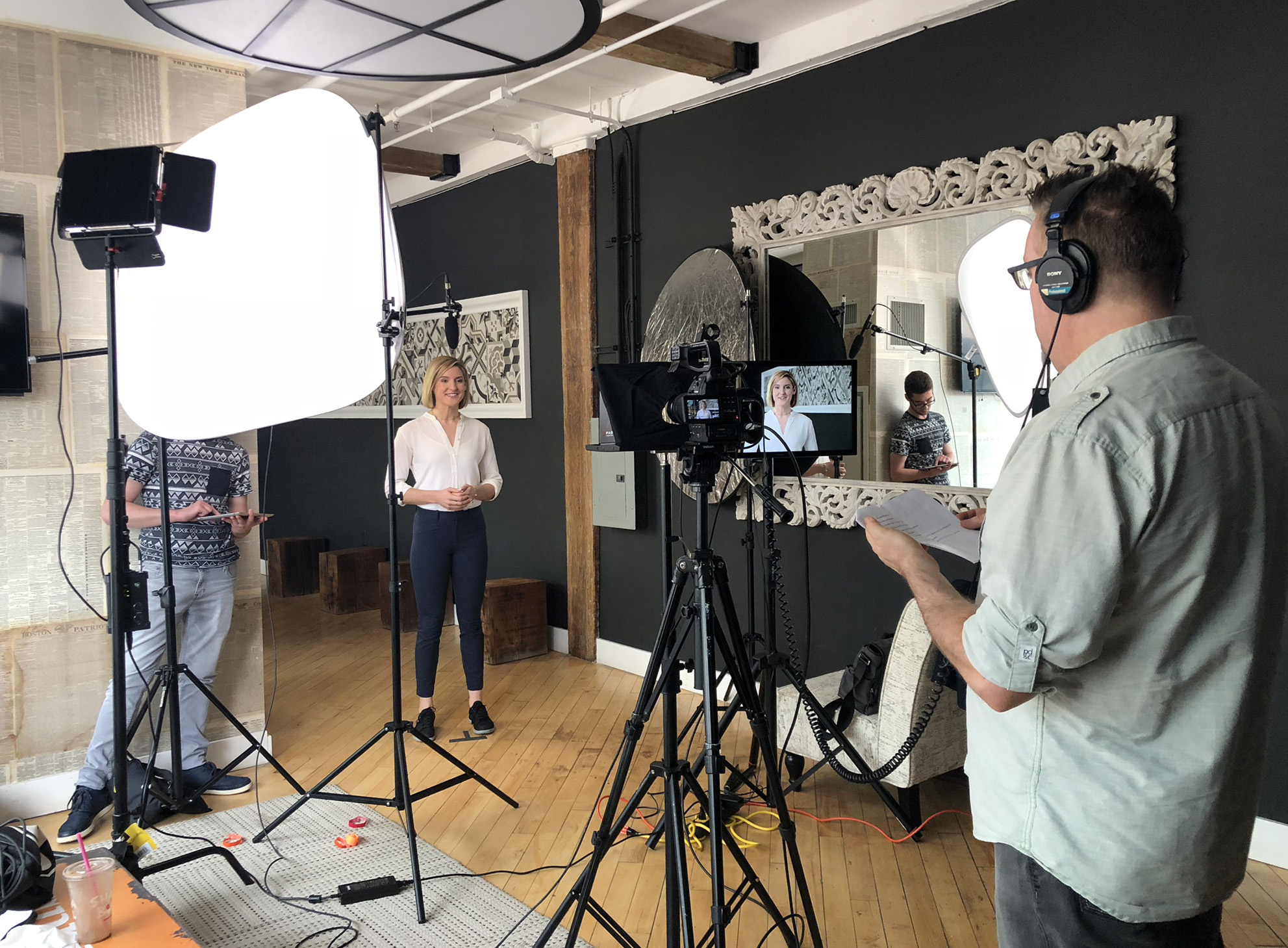
Watch to see how professional lighting, a mirror and expertly-placed reflectors can make an interview POP!


IS BAD LIGHTING ACTUALLY THAT BIG A DEAL?
Yes. Think about the commercials you see on television. Specifically, the commercials for the “old neighborhood car repair shop.” Have you ever seen one and thought to yourself, "this looks cheesy," or "this guy really seems a little untrustworthy” or, worse yet, “this company looks ridiculous”?
If so, it's probably the fact that is was filmed very badly, and probably with bad lighting. And that lack of professional video definitely affects our opinions in some way. The good news is that the reverse is true. Good production values = good branding and trustworthiness.
62% of people are more likely to have a negative perception of a brand that published a poor quality video experience.
23% of people who have been presented with a poor quality video experience would hesitate to purchase from the brand.
60% of viewers said a poor online video experience would dissuade them from engaging with a brand across all of its social media platforms.
57% of people are less likely to share a poor quality video experience.
Although lighting in video production is extremely important, it's never the only concern. We always make sure the background is clutter-free so that it doesn't overshadow the subject. In this case, we re-positioned a lot of books, vases, statuettes and even moved a large-screen television out the way.
With everything in the right place, we were ready to shoot away. After a few quick fun questions to loosen everyone up, we got to the testimonial questions.
Sometimes it's hard to believe what the viewer sees on their screen when you know what the space actually looks like. It's part of that "movie magic" that is so much fun. It can be challenging, fun, aggravating or a breeze. But it's always rewarding!